MIRACLE RADITYO
Indonesia
What If I Have Jumped?
I have often imagined the moment just before impact.
The split second where the body, ungoverned, hovers in a liminal purgatory between two absolutes—the leap and the landing, the before and the after. Perhaps I have been falling my entire life, not in the dramatic, catastrophic way one might envision, but in quiet increments, in the small hesitations, in the moments I chose not to act. It is an endless descent through uncertainty, waiting for something, someone, to catch me—or to tell me that I never needed catching at all.
The first time I stood at the edge of a rooftop, I wasn’t thinking about death. I just wanted to see. The city stretched below me, indifferent. My breath fogged the night air, my hands pressed against rusted railings. The world hummed on, unaware of my existence. I felt both infinitesimal and infinite, as if I could dissolve into the skyline and no one would ever know.
A door slammed behind me. My father’s voice, rough as gravel: “Only cowards hesitate. Jump or don’t jump. There is no in-between.”
But all I have ever known is the in-between. He believed the world could be divided into the strong and the weak, those who take the plunge and those who never leave the ground. He built his life upon absolutes, carving out certainty where there was none, as if standing too long in hesitation would erode his very being. Strength was the currency he understood best. A man who flinched was a man left behind, and he refused to raise a daughter who did not know how to choose. And so I learned to choose—not out of conviction, but out of necessity. Out of fear that hesitation itself would break me. He trained me in decisiveness, in efficiency, in the clean, cold precision of logic. When he spoke, it was in ultimatums. When he taught, it was through edges, through the unspoken lesson that to love him, to be accepted by him, meant to forsake doubt. I did not realize, then, that doubt was not a disease, but a part of being alive.
Years later, I watched my mother standing at the ocean’s edge. Dawn broke behind her, streaking the water in gold. The tide kissed her ankles, stole the sand beneath her feet, but she did not move. “The ocean never stops,” she whispered. “That’s why it never breaks.” Three months later, she was gone. She had always been a creature of movement. She spoke in half-finished thoughts, left books open on the table, let wind take her hair in wild directions. She never belonged to a single place, only to the currents that pulled her from one moment to the next. My father saw her as untethered, an unfinished idea, a contradiction he could never quite solve. But she was more than that. She understood something he never could: to be still is to invite ruin. That life is not a structure of stone but a river, carving and shifting, shaping and surrendering.
The absence hollowed out the house, filled it with unspoken things. My father refused to speak her name, and in his world, things that could not be controlled did not exist. But she existed everywhere: in my restless hands, in my inability to commit, to belong. I imagine her still moving, carried by unseen currents, shifting between places the way I have always shifted between versions of myself. Once, during a long drive, she had glanced at me, the weight of something unspoken in her eyes. "If only," she had murmured, but never finished the thought. And now I wonder—if only what? If only she had stayed? If only she had chosen differently? Or was it about me, about the way she saw herself in my hesitations? In my unwillingness to let myself be carried by the tide? For years, I dissected the mechanics of choice, as if breaking it apart would reveal some hidden circuitry, some undeniable answer. I thought if I could just find the right logic, the right philosophy, then maybe I could anchor myself to something real. But certainty never came. Only more questions. I was never afraid of the fall. I was afraid of what came after.
Perhaps that was why I stood on rooftops, on bridges, on the precipice of something nameless—searching for a moment that would strip me down to the rawest version of myself. Not to end, not to escape, but to understand. Because if I could stand at the edge and feel nothing, then maybe I had already disappeared. And if I felt everything—if my pulse roared in my ears, if my breath came sharp and uneven—then maybe there was something left to salvage. I have spent my life teetering between absence and presence, between drifting and staying. I have longed for something to shake me awake, to pull me out of the endless in-between. And so, the jump is not about dying. It is about asking the only question that has ever mattered: What if I survived it?
Today, I stood on the rooftop of an old library.
The wind howled through the steel railings, an impatient symphony. I was not thinking of death. I was thinking of my mother’s ocean. The way it moved, the way it refused to break. The way I have been trying to be like her, even as my father’s voice lingers in my mind, demanding absolutes. For a moment, I felt it—that fleeting sense of weightlessness, that unbearable suspension of self. And I understood. The jump is not about falling. It is about surrender. It is about trusting the wind, the ocean, the unseen forces that carry us forward. It is about shedding the old self, about leaping not to escape, but to become.
I did not jump. But in that moment, something profound shifted. I sat still, the world outside my window buzzing with its usual indifference. The city, with all its noise and movement, was a reminder that life did not stop for loss, it felt quieter now, somehow. The letter held me in its grasp, each sentence unraveling a thread I didn’t know I’d been clinging to for so long. The ocean, my mother, the jump—these fragments of my life had always felt like pieces I couldn’t quite align, moments that never fully made sense. I had spent so much time on rooftops, standing at the edges of things, waiting for a signal, a clarity that would push me to move. But now, as I sat there, reading her words once again, I felt something shift in me—a quiet surrender. Not to her absence, but to the understanding that her absence was not something to be fixed or filled. It simply was. And so was I. I tucked the letter back into its envelope, the words still echoing in the back of my mind. There was no grand epiphany, no dramatic conclusion to this chapter of my life. Instead, it was as if a veil had lifted, and I could finally see the quiet beauty in the in-between moments—the ones I had spent so much time running from, fearing they meant something was broken. For so long, I had been caught between two worlds: the certainty of my father’s ideals and the fluidity of my mother’s wisdom. One pulled me toward decision, toward absolutes, while the other invited me to float, to move with the current. I had tried to choose between them, to carve myself into one shape or another, but in the end, I had always been a bit of both. And that, I realized, was not something to fear, but something to honor.
I looked out the window once more, the faint hum of the city below, the horizon stretching endlessly. There was no need to make a decision now. I didn’t need to leap. I didn’t need to fall. I simply needed to be. For the first time, the weight of hesitation felt like something I could breathe into, instead of something that threatened to crush me. There was space in the stillness, a kind of quiet surrender that wasn’t defeat but an invitation to grow. The ocean, my mother, had known this: that life would never be still, that movement, in all its forms, was both the journey and the answer.
Perhaps the jump had already happened, not in the falling, but in the letting go. And yet, somewhere within me, What if I had jumped? Would the fall have been softer than the landing? still whispered—a question, not for what was, but for what could be. Not to make sense of the things left undone, but to remind me that there will always be a choice. And in that quiet moment, I felt something inside me unfurl—something soft, yet strong. It was a knowing, not of the future, but of the present. Knowing that I was already here, already whole, even in the spaces between the leap and the landing.
1st Place GLOBAL WINNERS 2025
-
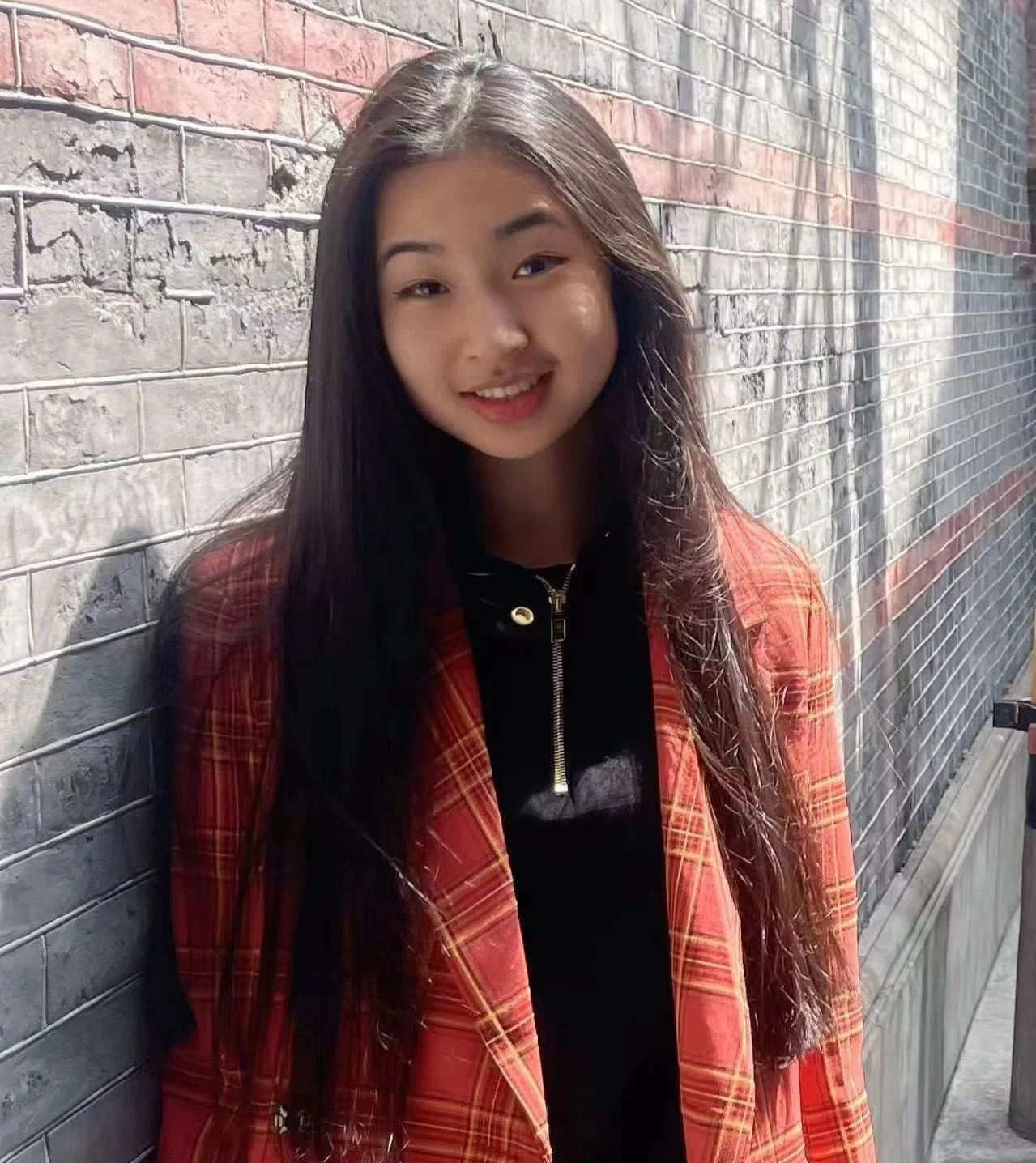
![A young woman with wavy brown hair, is smiling and standing outdoors near green plants.]()
journalistic
Serena Yufei Li
China -
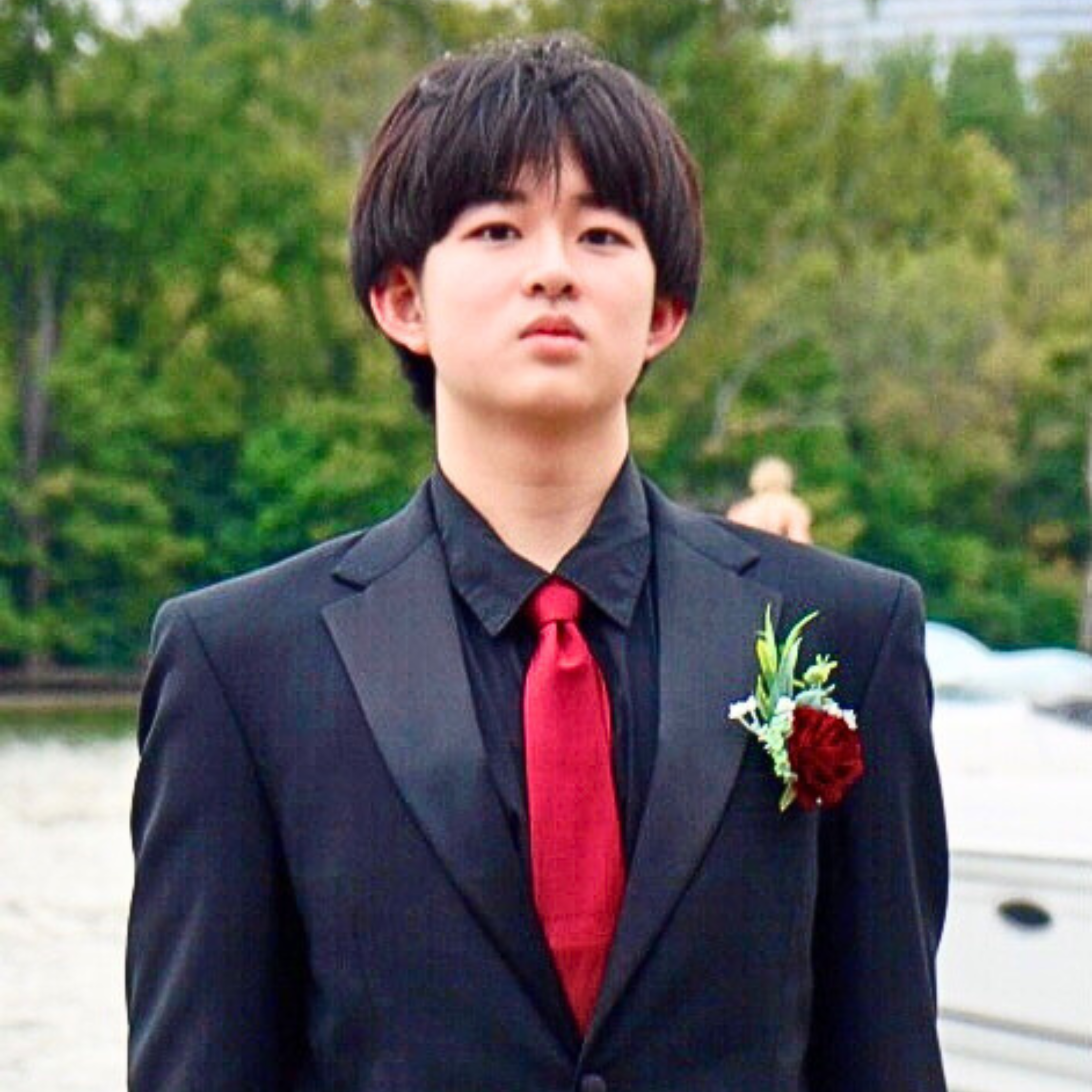
![Smiling boy with short dark hair, wearing a black shirt, outdoors with blurred green foliage in background.]()
Creative
Justin Yu
United States of America -
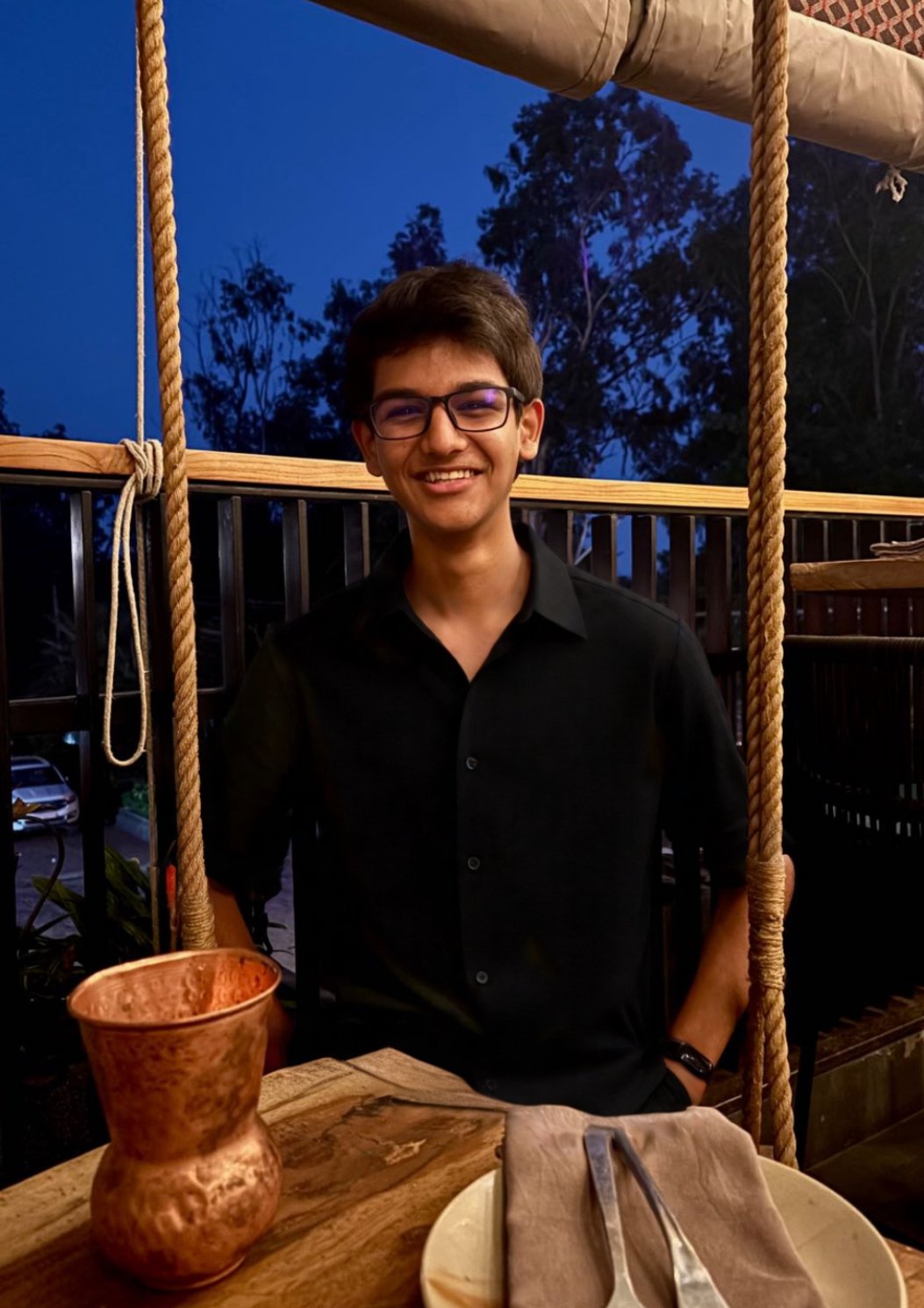
![Young man with dark hair smiling]()
argumentative
Aarav Jain
India