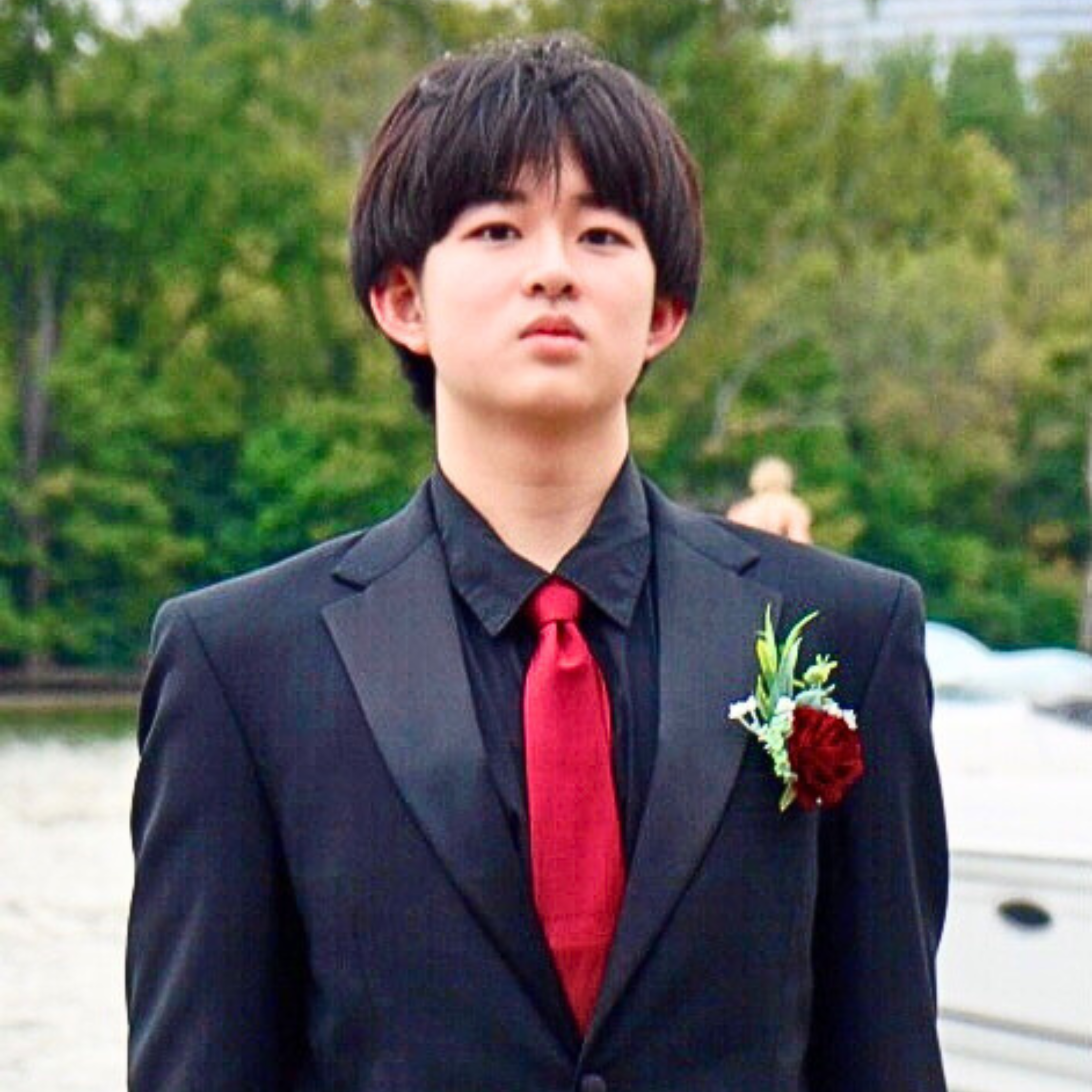
CHRISTOPHER SURUADJI
Indonesia
What I Owed Her at 8:37
A door appears in our hallway.
It isn’t glowing or creaking. It’s just wrong—too clean, too new—like someone cut a rectangle out of my house and patched in a different ending.
My phone is on the dining table, the family group chat pinned. I scroll up until I find her message.
Tante Fanny (8:37 PM):
Let’s split the prayers so we cover everything.
Mom: Litany of Trust.
My son: Divine Mercy Chaplet.
My daughter: Compline.
My niece: one decade of the Rosary.
My nephew: read the Prayer for the Sick slowly, then add one honest intention.
A thumb. A tap. The easiest kind of yes. A yes with no reverence behind it—just enough effort to make me feel like I participated.
That was the kind of faith I had for most of my life: responsive, not rooted. I grew up in comfort, in a life where suffering often seemed to belong to other people. Even when my grandfather died when I was four, death did not reach me in any lasting way. I understood the language of grief long before I understood its weight.
Until her, loss had always been distant. I would hear that someone had died, say what people say, and move on. I did not know what it meant to lose someone whose goodness had shaped the atmosphere of my own life.
Each time I met her, though, it felt different. She made goodness feel ordinary—not because it was small, but because she carried it so naturally. I had never seen her act bitterly, cruelly, or selfishly. Kindness seemed to be her first language.
The day before she died was my birthday. My family went to visit her. We were not allowed to come too close, but we were allowed to open the door and see her from a distance. Years later, I still remember it: her hand lifting in a small wave, the smile she still managed to give us. Even then, she was trying to make us feel lighter. I did not realize, at the time, that I was watching one of the last living gestures she would ever offer me.
I remember another moment too. It was Chinese New Year, and I had prepared for school embarrassingly late. I needed decorations, and I had left everything until the last minute. She went out of her way to help me, traveling far just to find better ones for me. She had no reason to inconvenience herself over something so small. But she did it anyway, because that was who she was: someone who treated other people’s burdens as if they were hers too.
That is why the message at 8:37 hurts so much. In my world, I answered her message. In the other world, I answered her.
Beyond the door is the life shaped by the choice I failed to make that night: to stop, kneel, and mean it.
I step into our living room.
This is the room Tante Fanny built whenever life cracked: chairs turned into pews, a white cloth over the coffee table, candles in glass cups, the Mary statue cushioned in tissue. When my dad nearly died of sepsis, she set up a full Mass right here—prayer books open, hymns low, all of us kneeling until our knees learned devotion by bruising. She never treated prayer as decoration or comfort. She treated it like labor, like something the body had to join if the heart wanted to mean it.
Tonight it is arranged the same way. The blue prayer book is open on the coffee table. Rosaries lie untangled like someone already did the hard work of beginning.
My phone buzzes again, but it is this world’s phone. Same chat. Same message. My reply is different here:
Yes. I’ll do mine. What exactly should I pray for?
Her answer comes fast:
Pray for what you’d regret not saying if time ran out.
And don’t rush. God isn’t timing you.
A cup clinks in the kitchen. She walks in with tea and plain crackers.
I kneel. The carpet bites. I remember her hands pressing mine together when I was younger. Stay. Faith is something you do with a body that wants to escape.
I begin reading, slowly.
At first the words feel familiar. But halfway through, her line returns—if time ran out—and something inside it sharpens. The prayer stops sounding like a ritual and starts sounding like a window that is quietly closing.
In my world, what had I left undone because I trusted tomorrow more than I loved her tonight? How much of my life had I mistaken acknowledgment for devotion, a quick reply for a faithful response?
For most of my life, my faith had been an inherited motion. If my aunt asked me to go to church, I would go. If no one asked, I would not. I believed in God’s presence, but I had not yet felt compelled to wrestle with Him myself.
Then comes the memory I never invited and can never send back.
Our maid of twenty years called crying, saying Tante Fanny was in the ICU, in critical condition, and that we had to come immediately. I still remember every position in the car as if grief pinned us there permanently: I was in the backseat, my mother beside me taking the call, my brother in the front, my father still at the office. But halfway to the hospital, we were told that she had died, and all that secondhand knowledge collapsed.
My mother broke down crying immediately. I didn’t. Not at first. I went silent.
I kept thinking the same impossible thought: how could the one person I had never seen hardened by bitterness or meanness be taken away like this? I knew tragedy existed. But I had never truly confronted the fact that someone could pour so much goodness into the world and still be removed from it without warning.
Later, that question changed shape. I began to see that goodness was never a bargain with time. Her death reminded me of Jesus—the way He moved through the world healing, comforting, forgiving, carrying other people’s pain, and was still mourned, still asked to suffer despite His innocence. It taught me that goodness does not protect a person from loss. The measure of a life is not how long it stays, but what it leaves living in other people after it is gone.
The room blurs, as it begins to let her go.
Her face fades mid-smile, like a candle pinched out.
Click.
I’m back in my hallway. The door is gone.
Only then do I open the newest messages.
Wake. Chrysanthemums. Funeral.
The word funeral locks something inside my ribs. There is no time left to bargain with now—no extra minute to trade for 8:37, no door left to negotiate with.
After that, grief became brutally physical. That was the first time I had truly prayed—not because someone assigned me a prayer, but because I finally needed God to be real. In that moment, stripped of everything but grief, I made a promise: I would not give up on the life she believed I could live.
She was the one person who believed in me despite my failures. In school, in struggle, in all the moments when I felt small or disappointing—even in seasons when those closest to me could not fully see me—she did. She loved me as if I were already becoming who I was meant to be.
After the funeral, when I looked back through our private messages, I finally broke.
Weeks before she ever became critically ill, she had written:
Remember, Jesus will always love you, no matter what others say about you. They do not know your story, your wounds, or the weight you have carried. I will not always be here, but know that I, too, will always love you. So let that love become the way you live: give it away, carry others gently, and act with love toward them, Nak.
Nak. Child.
What shattered me was that she had already told me how to live after her. Love, in her understanding, was never supposed to end where it was received. It had to move outward. It had to become action.
So I kneel where the living room light falls. No shortcut. No reaction. No pretending.
I read the Prayer for the Sick slowly, then speak one honest intention out loud—the one I owed her at 8:37.
Not just for her healing, though I should have asked for it with more urgency. Not just for more time, though I would have traded anything for it. I pray for the strength to become someone who no longer lives as if love can always be postponed, someone who understands that the cruelest thing about lost time is how ordinary it looks while you still have it.
Pray for what you’d regret not saying if time ran out.
And in our world, time did.
1st Place GLOBAL WINNERS 2025
-
![A young woman with wavy brown hair, is smiling and standing outdoors near green plants.]()
journalistic
Serena Yufei Li
China -
![Smiling boy with short dark hair, wearing a black shirt, outdoors with blurred green foliage in background.]()
Creative
Justin Yu
United States of America -
![Young man with dark hair smiling]()
argumentative
Aarav Jain
India