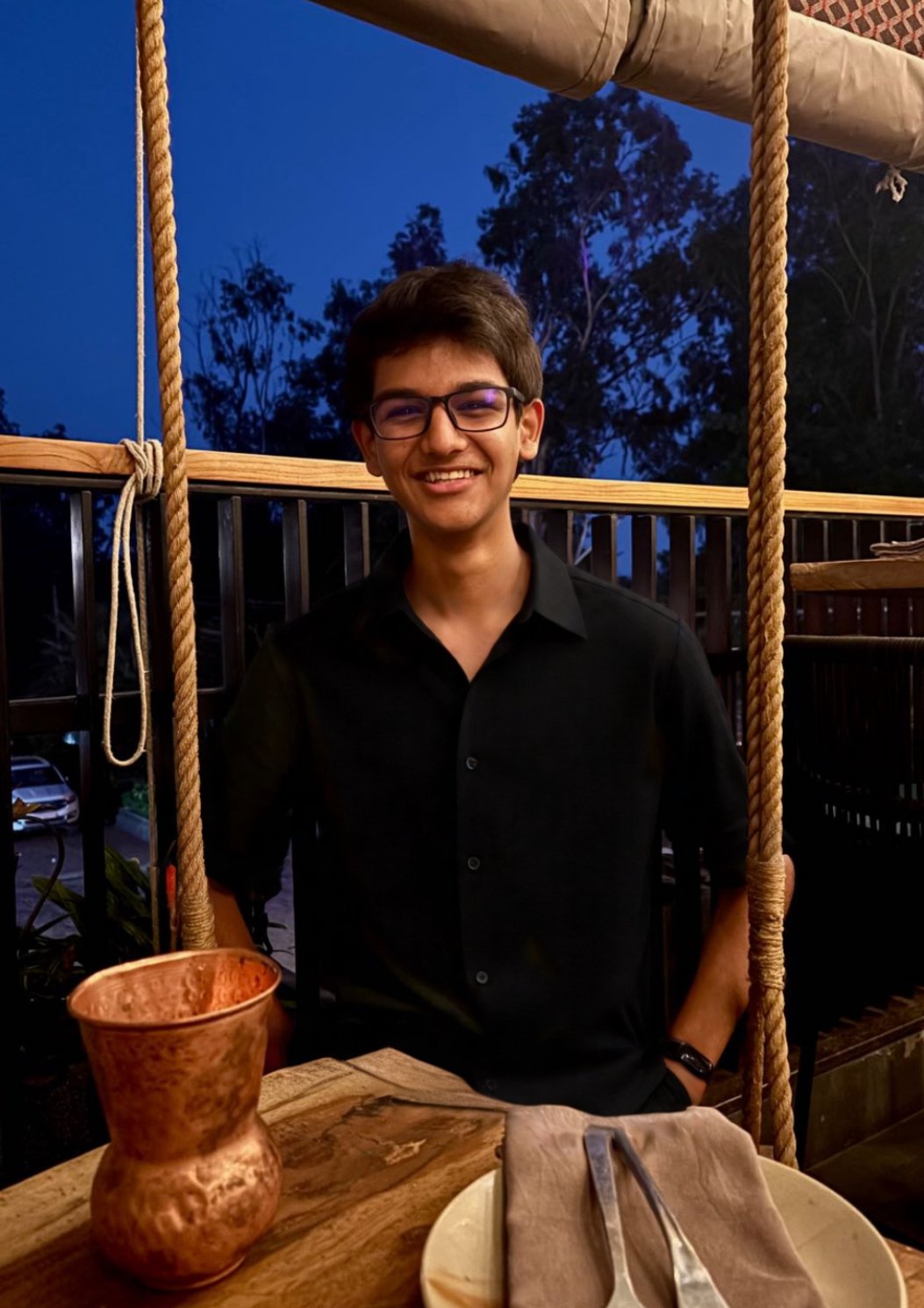
ARMAND
Botswana
Am I My Brother’s Keeper?
15-year-old Junior took a walk from his home in the Bronx to visit his friend at the popular teenage hangout spot, Adams’s place - two blocks later, multiple men chase him, surround him in a bodega, drag him to the sidewalk and repeatedly, viciously stab him in the neck with machetes and knives. They mistook him for a rival gang member. A crowd of witnesses were present. No one offered to help. As blood gushed from his neck, the extent of aid the witnesses provided was shouting, “Run to the hospital!” He tried, but collapsed on the sidewalk and died. One phone call to the police or a lift to the hospital could have saved this 15-year-old child’s life, yet no one even attempted. The consequences of this act of omission should be meditated on diligently and strenuously. Are we to assume these static witnesses bear no amount of fault in this tragedy? The acquittal of all fault from unmoving bystanders is a catastrophic idea.
The echoes of passive bystanders reverberate especially through the horrors of the twentieth century: Powerless Jews hauled to gas chambers; millions of innocent people dragged to the gulag in Russia. Even Solzhenitsyn with his powerful, unshaken book, The Gulag Archipelago, put some hope in the bystanders at times of extensive arrests and death: “Would not our fellow citizens have begun to bristle?” How dramatically the course of history would have changed if it were but for the voices of the onlookers during these times. One could argue that the consideration of personal safety is of cardinal value, though almost all the time no radical actions need to be taken. There is much space between nothing and dying. Even at such tragic times as the holocaust, the rumblings of the watching bystanders could have made a difference, never mind the heroic and courageous acts of people like Witold Pilecki.
The diffusion of responsibility is a well-known psychological concept; essential to the bystander effect which states that the more onlookers there are, the less likely they are to help someone in dire need. Although, the opposite is true also. If one person helps, everyone around is also much more likely to help. By this we can conclude that the amount of influence the upstander has is not limited only to himself but stretches to everyone around him. The bystander’s responsibility is thus multiplied as the potential to act effectively is increased.
After murdering his sibling, Cain cried, “Am I my brother’s keeper?”. That story has in part told us the answer is a loud and deeply felt yes. From a moral perspective, it is wise and honorable to look out for your brother; to be a good Samaritan. As Charles Dickens proclaimed: “No one is useless in this world who helps lighten the burdens of others.”
There is, however, a deeply pertinent idea that should not be overlooked: It is that of individualism and objectivism - the belief that each individual is responsible for himself and himself only. This has been the basis of all western civilization for the past century; that you should focus on yourself as an individual and in that way, you cannot expect anyone else to afford you safety or happiness at their own expense. This does imply, however, that you are not expressly responsible for anyone else. Not their safety, nor their well-being. While it might be a kind thing to do, you would not be at fault for solely thinking of your own skin when someone is in need. You do not have to burden yourself with rectifying the sufferings, misfortunes or even mistakes of others.
In order to evaluate and test this idea, let us enter a hypothetical scenario. Suppose you have a friend who wants to murder his hated colleague. He tells you about his acquired weapon and about his plan, yet you stare blindly, passively ahead. Clearly, this is a cowardly act, but are you also at fault, like your friend? No, you are not. If you did not exist, erased from the equation, the murder would still occur. If your friend did not exist, there would be no atrocious event at all; this is to say, you did not pick up a gun and shoot someone as the perpetrator did. The murderer also now does not have the luxury of blaming others for his dysfunction and actions, as his actions are his responsibility. It is precisely for this reason that you have no duty to rescue or assist another person who is in danger in the majority of states in the U.S.A, otherwise known as the “American Bystander Rule.”1
Returning to the philosophy of objectivism, we have to view the potential guilty bystander through the lens of altruism. Altruism is yet another fundamental part of our culture. Although it should be well understood in order to prevent it from being misused. The act of being unfailingly altruistic may lend itself to the temptation of self-sacrifice. As the creator of objectivism herself, Ayn Rand2, put it when referring to self-sacrifice: “’don’t like’ I would say is too weak a word, I consider it evil.”3 This ties in with the idea that no man should be responsible for the well-being of any other and with his own welfare as his primary objective. A universal culture of expected self-sacrifice builds the foundations for society to breed tyrants and naïvely self-sacrificial victims. Once we as a society expect that self-sacrifice be essential, things may very well turn out very dismally. We have asserted that you are your brother’s keeper, but are you truly his liberator - or even shepherd?
The classic anecdote follows these lines: Once upon a time there was a caterpillar stuck in its cocoon and a well-intentioned stranger took up his scissors to mercifully cut it free. Shortly after a single-winged and crippled butterfly trudged out into the world. This brings us to another important question every bystander should ask, namely: “Do I know how to help?” For example, you could try to give a starving alcoholic money to acquire some food, but they could just once again wastefully indulge to their demise. Likewise, a doctor could prescribe medicine to a seemingly depressed, yet addicted client. Asking this question does not come from a place of ethical egoism. That the purpose of the individual is only to improve himself. The question comes from a sense of humility. Realizing that you are not knowledgeable about everything and that you could easily make the wrong decision. It is worth considering seriously first whether you would do more harm than good. Not hurting someone is an ethical and legal responsibility, but helping someone is not. It is for precisely this reason that there are state institutions such as first responders. In the strictest sense only the state and assigned professionals are truly obligated to help.
During the food shortage crisis in Swaziland in 2016, the UN provided food aid which fed more than 200, 000 people4. This act of kindness, however, had underlying consequences that were unpredictable. Hundreds of farmers gave up on farming as they came to rely on food aid. Some farmers even sold what they had received. As a result, unemployment skyrocketed and a whole generation of children grew up without agricultural skills or knowledge. These events might have been more detrimental than the food crisis itself. The universal expectation of unfailing help often results in complacency. Essentially, complacency should be minimized while the striving of the individual to do better for himself should be emphasized. This can only be achieved, of course, when someone is not in a truly deadly situation. The encouragement of the individual can be achieved through not offering unrelenting help from bystanders when a task can be achieved without aid. In this way, every person could do well enough for themselves in order to serve anyone who is in truly dire need.
Thus, it is imperative to remember that, while helping someone in peril or misfortune may be an honorable and brave thing to do, the complexity of such situations should not be underestimated. We should not let our limited knowledge produce unseen consequences of unparalleled magnitude. Being an upstander may be kind and unbelievably influential but it may also be unwise and damaging. While possibly considered a selfish act, it is not the obligation of the individual to help first, but to look to himself. Therefore, the stationary bystander is not strictly at fault. He should only be held accountable for what he himself has done. We, as a society should avoid being given to self-sacrifice and false altruism or we may lend ourselves to a dysfunctional and dangerous future.
1st Place GLOBAL WINNERS 2025
-
![A young woman with wavy brown hair, is smiling and standing outdoors near green plants.]()
journalistic
Serena Yufei Li
China -
![Smiling boy with short dark hair, wearing a black shirt, outdoors with blurred green foliage in background.]()
Creative
Justin Yu
United States of America -
![Young man with dark hair smiling]()
argumentative
Aarav Jain
India